How to Stop Condensation on Bedroom Windows Every Morning
Wiping down your windows with a towel isn't a solution. Discover the science of the "Dew Point" and how smart ventilation can fix the root cause of crying windows forever.
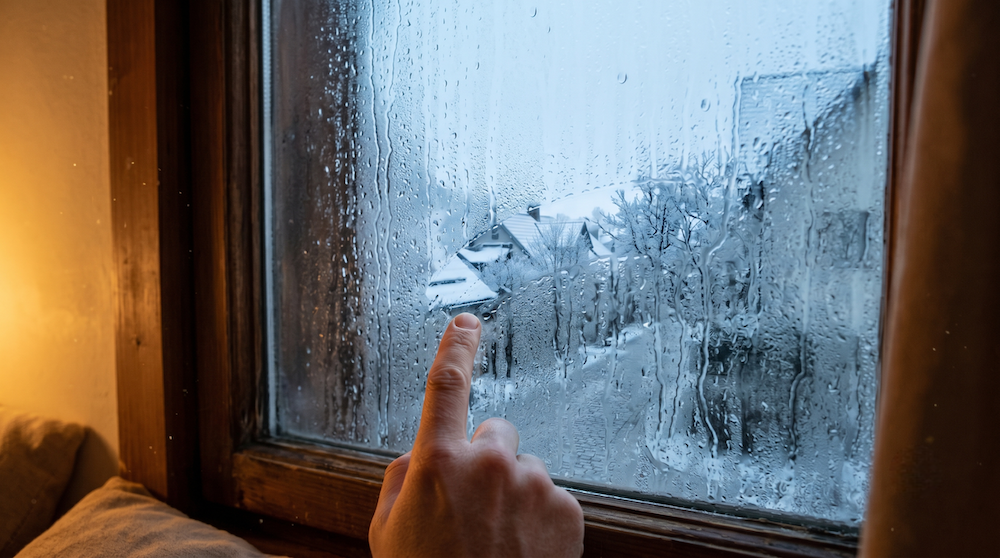
It is a familiar winter ritual across Europe: you wake up, pull back the bedroom curtains, and the glass is completely obscured by heavy condensation. Puddles form on the windowsill, and worse, tiny black spots of mold begin to appear along the silicone sealant.
Most people resort to wiping the glass down with a towel or buying expensive, power-hungry dehumidifiers. But to permanently stop morning condensation, you need to understand the underlying physics causing it: The Dew Point.
The Science of the Dew Point
Air acts like a container for water vapor, but the size of that container changes with temperature. Warm air can hold a lot of water. Cold air can hold very little.
While you sleep, you exhale roughly 400ml of water vapor into your bedroom air. Because your bedroom is heated, the air easily holds this moisture. However, the glass on your window is in direct contact with the freezing outside air, making it the coldest surface in the room.
When the warm, moist indoor air bumps against that cold glass, the air rapidly cools down. As it cools, its "container" shrinks. The exact temperature at which the air's container becomes 100% full and can no longer hold the water is called the Dew Point. The excess water is forced out of the air and condenses as liquid droplets onto the glass.
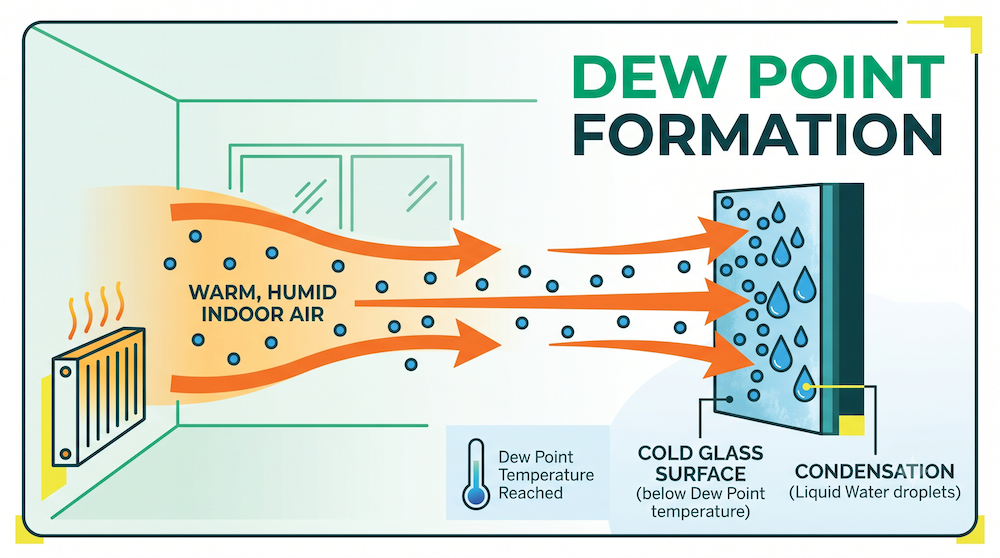
The Dew Point Effect in Action
Fixing the Root Cause
To stop the condensation, you have to break the Dew Point equation. You have two options:
- Option A: Make the glass warmer. (Requires ripping out your windows and installing highly expensive triple-glazing).
- Option B: Remove the water from the air. (Lower the Absolute Humidity of the room before you go to sleep).
Option B is entirely free. By executing a proper 5-minute burst ventilation (Stoßlüften) before bed, you flush out the heavily saturated indoor air and replace it with dry outdoor air. Because the new air contains significantly fewer grams of water, it won't hit the dew point when it touches the cold glass overnight.
The Timing Problem
You can only lower your indoor humidity if the absolute humidity outside is lower than it is inside. If you open the window at the wrong time (like during a misty, humid evening), you will actually let more water into the room, making the morning condensation much worse.
The Smart Solution: Ventilation Alerts
Knowing exactly when the outdoor air is dry enough to ventilate requires complex thermodynamic calculations. That is why we built the Humidity Window app.
We designed a feature specifically for this problem: Smart Ventilation Alerts.

Wake Up to Dry Windows.
Our app monitors your local outdoor weather data in the background. When the absolute humidity outside drops to the perfect level, it sends a Ventilation Alert to your phone. Open the window for 5 minutes when prompted, flush out the moisture, and say goodbye to morning condensation forever.